
Major Verdict for Breach of Fiduciary Duty and Financial Exploitation
January 15, 2026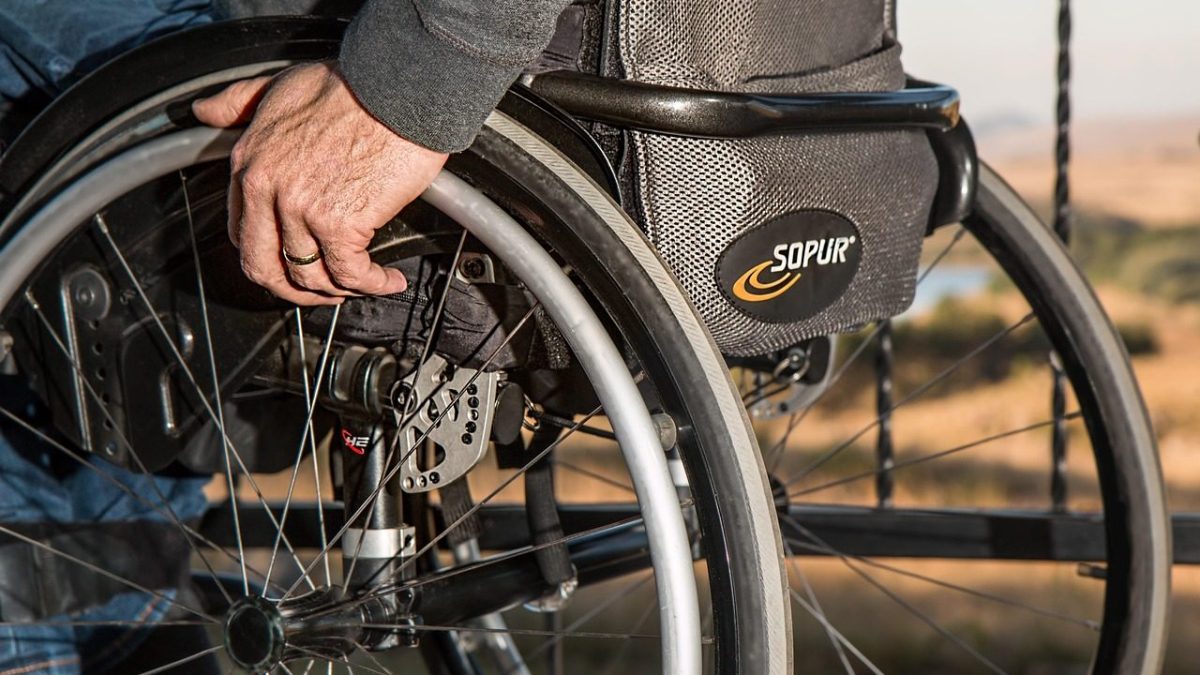
Our firm represented a wheelchair-bound client who suffered catastrophic injuries due to a commercial property’s failure to comply with federal, Maryland, and local accessibility requirements. While exiting a business open to the public, our client attempted to exit the store through the only customer door, which was equipped with a paddle-style handle extending across the door glass to accommodate his wheelchair. The handle had been installed during a store retrofit, without County approval of the blueprints, where a deadbolt lock had previously existed. The handle had been installed below the height required by several building codes, which were meant to facilitate, e.g., safe wheelchair access as required by other law, including the Americans with Disabilities Act (ADA).
Additionally, the business failed to maintain the closer mechanism for the door which controls the delay and speed at which a door closes to prevent accidents.
As our client exited the store, the combination of a too quickly closing door and an improperly placed handle caught his arm, preventing him from stopping his motorized wheelchair, causing it to continue forward and he was violently thrown to the cement walkway. He sustained serious injuries to his back, knee, and head—injuries so severe that he was ultimately unable to return to work.
Our attorneys, led by Toby Byrd, a former structural engineer, and Timothy Leahy, conducted an in-depth investigation of the property’s design, construction, and maintenance, focusing on the intersection of premises liability law and disability access regulations. We demonstrated that the business failed to provide a safe means of ingress and egress for individuals with mobility impairments and that the ADA and code violations directly created a foreseeable and dangerous condition.
This case underscores our firm’s deep understanding of premises liability principles, building and accessibility codes, and disability rights law. We aggressively hold property owners and operators accountable when they ignore accessibility requirements and place vulnerable individuals at risk. Our advocacy ensures that injured clients are not only compensated for their losses, but that public spaces are made safer and more accessible for everyone.